
"Congenital deafness is often invisible and unexpected for parents. However, it is common enough to warrant concern. In fact, 1 to 6 babies out of 1000 are born with a hearing impairment that can impact their development, especially if it is not detected early. Interventions are possible from the first months of life if hearing impairment is confirmed, whether it is temporary or permanent."1
The ability to hear plays a crucial role in the development of language, communication, and learning. Hearing screening conducted within the first days of a child's life allows for the quick detection of any hearing loss so that early intervention can occur, reducing the impacts of deafness on development and promoting your child's full potential.
At Audio Logique, we can conduct this screening using otoacoustic emissions (OAEs). This is a non-invasive, painless, and quick examination. The baby should be calm or asleep. This technique is objective and provides immediate results. It is preferable for the screening to take place within the first month of life. However, this type of examination can be performed until the age of 6 to 7 months.
1. Ordre des orthophoniste et audiologistes du Québec. Le dépistage auditif chez les enfants | OOAQ Consulté le 15 août 2025
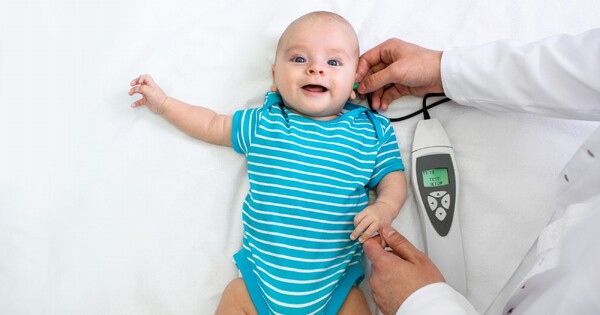
"A failed hearing screening does not necessarily mean that the baby has deafness; rather, it indicates a higher risk of having a temporary or permanent hearing impairment."1
1. Ordre des orthophoniste et audiologistes du Québec. Le dépistage auditif chez les enfants | OOAQ Consulté le 15 août 2025
Contact
1 888 556-4478
info@audiologique.ca
Quick Links
Our Clinics
Make an appointment
 Make an appointment